
Many tea lovers often ask, Does Jasmine Tea have Caffeine? The simple answer is yes. Jasmine tea usually contains caffeine because it is made from rea
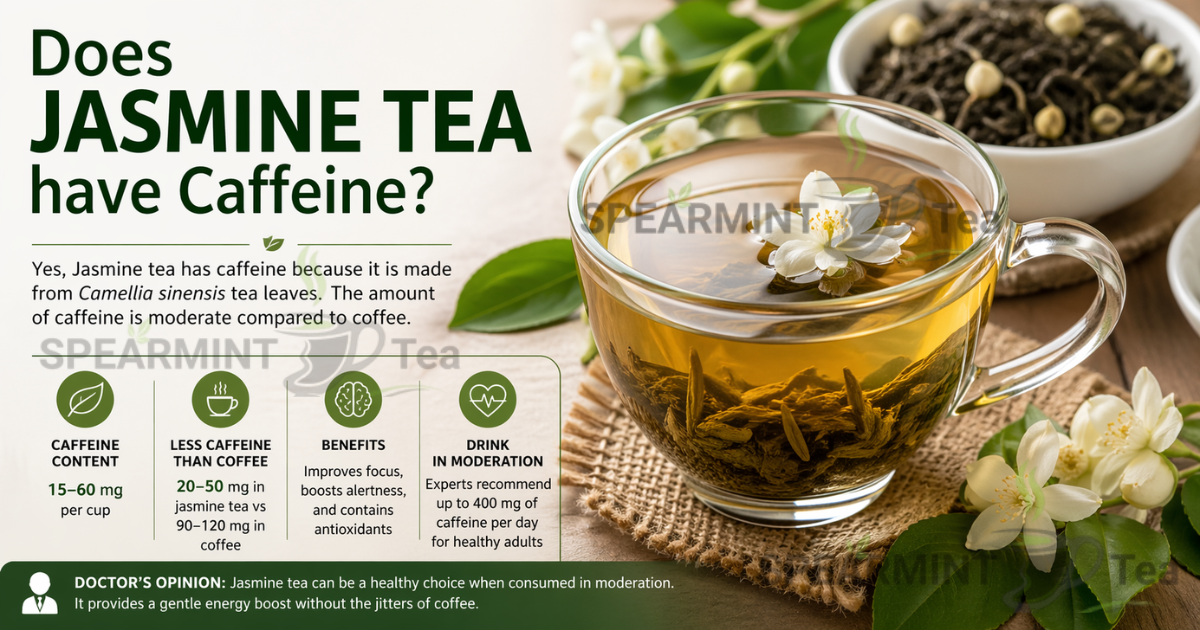
Many tea lovers often ask, Does Jasmine Tea have Caffeine? The simple answer is yes. Jasmine tea usually contains caffeine because it is made from real tea leaves. These leaves come from the Camellia sinensis plant, which naturally contains caffeine. According to health experts and nutrition researchers, most jasmine tea varieties provide a mild caffeine boost compared to coffee.
Doctors often explain that caffeine levels vary depending on tea type and brewing style. Understanding caffeine content helps people make better daily beverage choices, especially in the United States.
What Is the Caffeine Content in Jasmine Tea?
Jasmine tea is not a separate plant-based tea like herbal infusions. It is created by scenting tea leaves with jasmine flowers. Most commonly, green tea is used as the base, though white, black, or oolong tea can also be used.
Medical experts highlight that caffeine comes from the tea leaves, not the jasmine flowers. Pure jasmine flowers are naturally caffeine-free. This distinction is important for people who are sensitive to caffeine. In the United States, many consumers mistakenly assume jasmine tea is herbal, which is not always correct.
What Is the Caffeine Content in Jasmine Tea?
If you are wondering Does Jasmine Tea have Caffeine? Research shows that an average cup contains between 15 mg and 60 mg of caffeine.
For example, jasmine green tea typically contains around 20–35 mg per cup, while jasmine black tea can have higher levels.
Doctors often compare this to coffee, which contains around 90–120 mg per cup. This makes jasmine tea a moderate and smoother option for daily consumption in the U.S.
Types of Jasmine Tea and Their Caffeine Levels
Different types of jasmine tea have varying caffeine levels based on the tea base used. Jasmine green tea is the most popular and offers moderate caffeine. Jasmine white tea contains the lowest caffeine levels, making it suitable for sensitive individuals.
On the other hand, jasmine black tea contains higher caffeine, similar to regular black tea.
Doctors recommend choosing the right type based on your tolerance and daily caffeine intake. This helps maintain energy levels without causing unwanted side effects.
Doctor’s Opinion on Jasmine Tea and Caffeine
Health professionals in the United States often emphasize moderation when consuming caffeine. According to medical sources, jasmine tea contains caffeine that may cause mild effects like alertness and improved focus.
However, doctors also warn that excessive caffeine intake can lead to anxiety, sleep issues, and increased heart rate.
Most experts suggest limiting caffeine intake to about 400 mg per day for healthy adults. Jasmine tea fits well within this limit when consumed responsibly.
Benefits of Caffeine in Jasmine Tea
Caffeine in jasmine tea offers several health benefits when consumed in moderation. It helps improve mental alertness and concentration. Studies also show that tea contains L-theanine, which works with caffeine to create calm focus.
Doctors often recommend jasmine tea as a healthier alternative to coffee. It provides a gentle energy boost without causing strong jitters. This makes it ideal for professionals and students across the United States.
Side Effects of Drinking Too Much Jasmine Tea
While discussing Does Jasmine Tea have Caffeine?, it is also important to consider side effects. Drinking excessive amounts may lead to restlessness, insomnia, or digestive discomfort.
People who are sensitive to caffeine should monitor their intake carefully. Doctors also advise pregnant women to limit caffeine consumption due to potential risks. Moderation is key to enjoying jasmine tea safely.
How to Reduce Caffeine in Jasmine Tea
There are several simple ways to reduce caffeine intake from jasmine tea. Experts suggest using lower brewing temperatures and shorter steeping times.
You can also choose jasmine white tea or decaffeinated options for lower caffeine content. Another method is to re-steep the same tea leaves, as later infusions contain less caffeine. These tips are especially helpful for U.S. consumers who prefer low-caffeine beverages.
Jasmine Tea vs Coffee: Which Has More Caffeine?
When comparing beverages, jasmine tea contains significantly less caffeine than coffee. A typical cup of jasmine tea has around 20–50 mg of caffeine, while coffee contains nearly double or more.
Doctors often recommend switching to tea for those trying to reduce caffeine intake. Jasmine tea provides a balanced alternative that supports both energy and relaxation.
Should You Drink Jasmine Tea?
So, Does Jasmine Tea have Caffeine? Yes, it does, but in moderate amounts. This makes it a suitable choice for people seeking a gentle energy boost without strong side effects.
Health experts agree that jasmine tea can be part of a balanced lifestyle. When consumed responsibly, it offers both health benefits and a pleasant drinking experience. For U.S. consumers, it remains a popular and healthier alternative to high-caffeine beverages.
FAQs
1. Does Jasmine Tea have Caffeine?
Yes, most jasmine tea contains caffeine because it is made from tea leaves.
2. Is jasmine tea stronger than coffee?
No, jasmine tea has much less caffeine than coffee.
3. Can I drink jasmine tea at night?
It depends on your sensitivity to caffeine. Choose decaf or herbal versions for nighttime.
4. Is caffeine in jasmine tea healthy?
Yes, in moderate amounts, it can improve focus and mental alertness.

COMMENTS